SMD vs Through-Hole DIP Switches: Which to Choose?
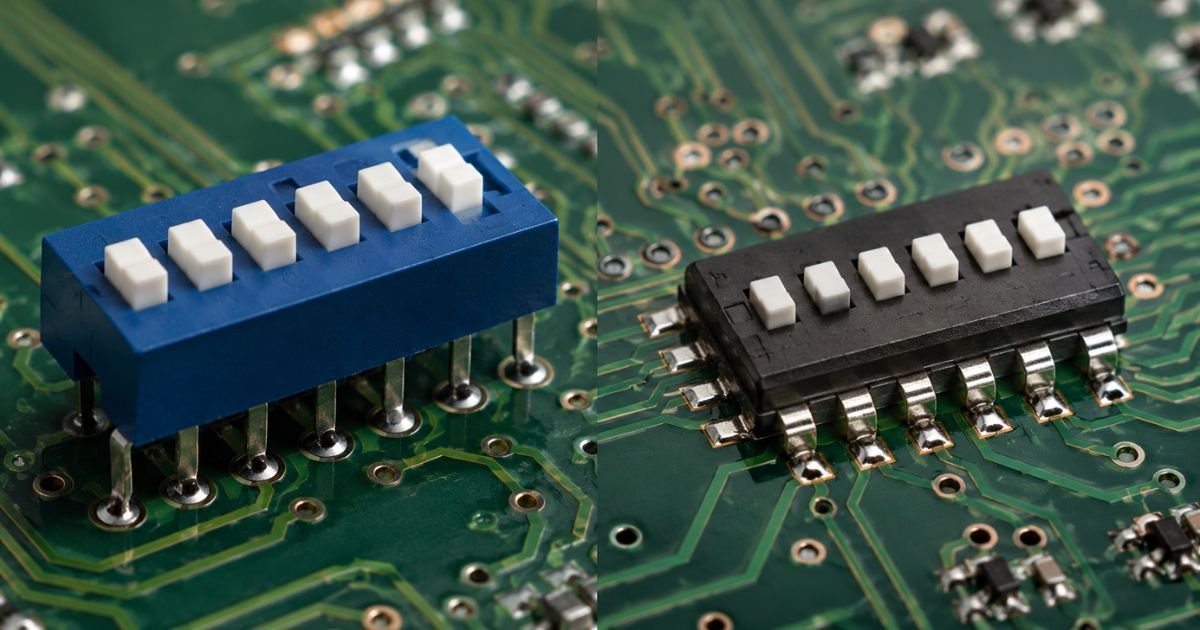
Compare surface-mount and through-hole DIP switches for board assembly, mechanical support, space, and servicing. Check the component datasheet for footprint and ratings.

 Meena
Compare surface-mount and through-hole DIP switches for board assembly, mechanical support, space, and servicing. Check the component datasheet for footprint and ratings.

Compare small configuration DIP switches with individual toggle switches. Understand their usual roles and why electrical ratings must come from the datasheet.
Compare the decimal value of the same switch pattern under SW1-as-LSB and SW1-as-MSB conventions. Check which weighting your equipment uses.
Convert values from 0 to 63 into six binary switch positions and verify the result by adding the values of the ON switches.
Convert a one-based absolute DMX channel number into a universe and channel, or reverse the conversion. This tool handles numbering, not network routing or fixture packing.
Understand nine-bit DMX address values, the role of switch 9, and why address 512 needs device-specific handling. Includes an address-173 reference table.
Plan start addresses for identical DMX fixtures using their channel footprint. Identify occupied channel ranges and whether the patch fits within one 512-channel universe.
Read a binary DIP switch pattern as a decimal value by summing its ON-switch weights. Confirm the numbering convention used by your equipment.

Compare DIP switch banks with jumper pins for configuration, convenience, board space, and servicing. Match the component’s electrical rating and footprint to the design.
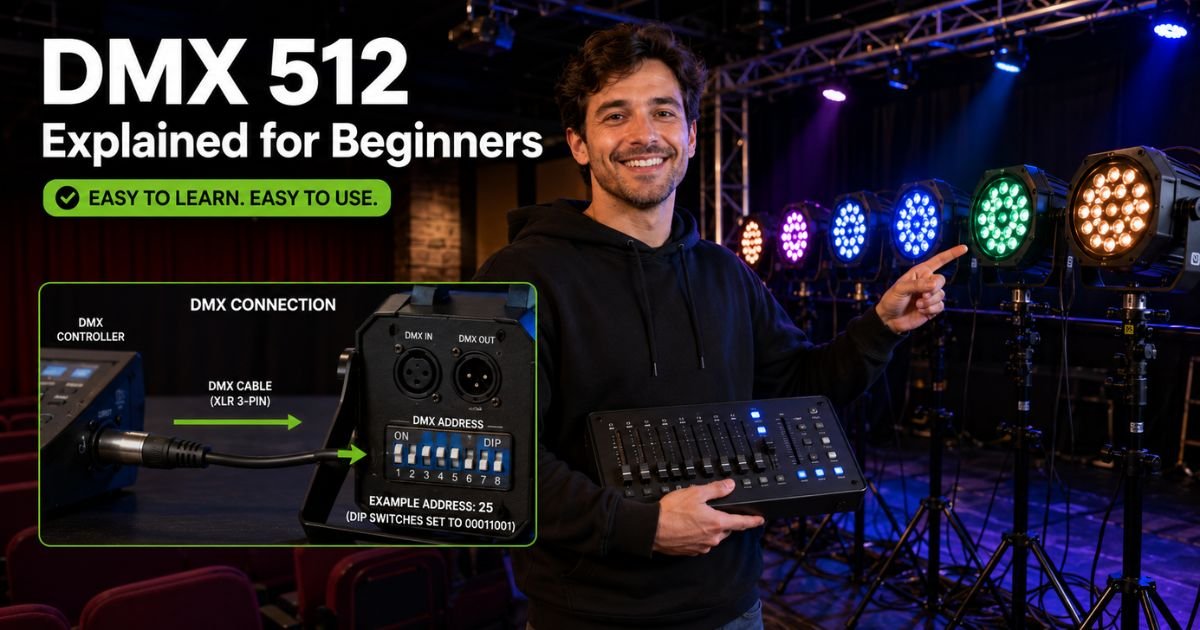
Learn the difference between a DMX channel, start address, fixture personality, and universe. Follow a practical patch example before setting up a lighting rig.