DIP Switch vs Toggle Switch: What’s the Difference?

Compare small configuration DIP switches with individual toggle switches. Understand their usual roles and why electrical ratings must come from the datasheet.

Learn how to configure, read, and troubleshoot DIP switch settings for electronics, DMX lighting, industrial controls, and networking devices. Step-by-step guides make binary switch setups simple and accurate.
Compare small configuration DIP switches with individual toggle switches. Understand their usual roles and why electrical ratings must come from the datasheet.
Understand nine-bit DMX address values, the role of switch 9, and why address 512 needs device-specific handling. Includes an address-173 reference table.

Compare DIP switch banks with jumper pins for configuration, convenience, board space, and servicing. Match the component’s electrical rating and footprint to the design.
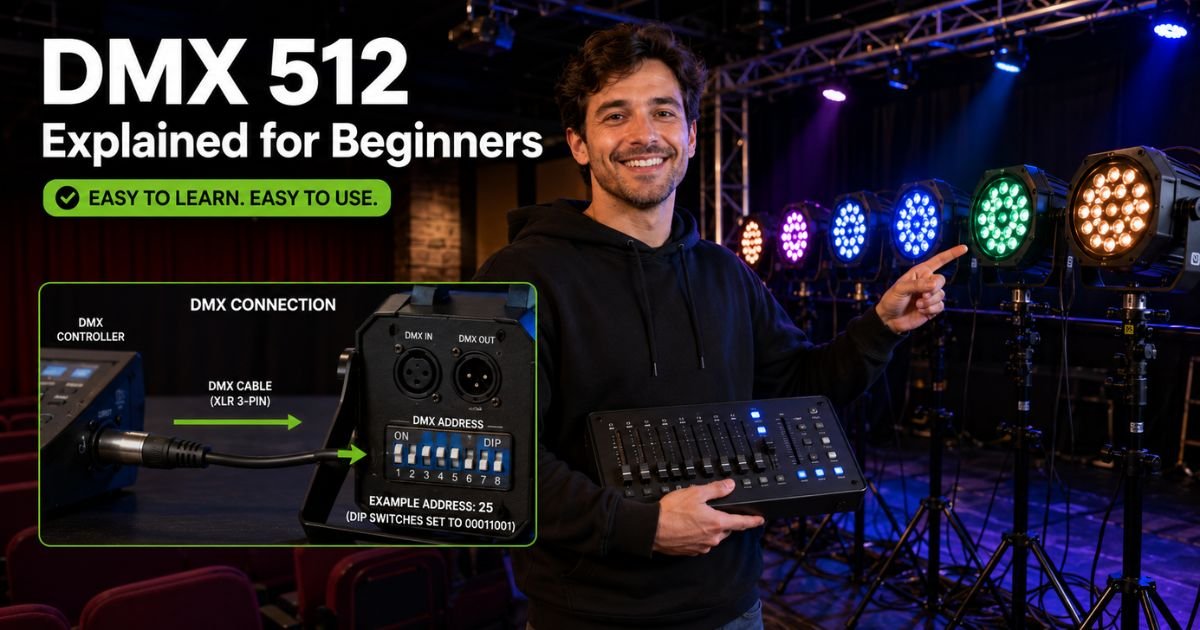
Learn the difference between a DMX channel, start address, fixture personality, and universe. Follow a practical patch example before setting up a lighting rig.

Explore common equipment categories that use DIP switches, from lighting to controllers. Understand why the exact switch functions depend on the product model.

Learn how to locate the correct HVAC configuration table and record existing settings. Airflow, operating mode, and switch functions depend on the equipment manual.

Understand how Modbus serial device addresses can be assigned with DIP switches. Separate protocol addresses from manufacturer-specific switch encoding.
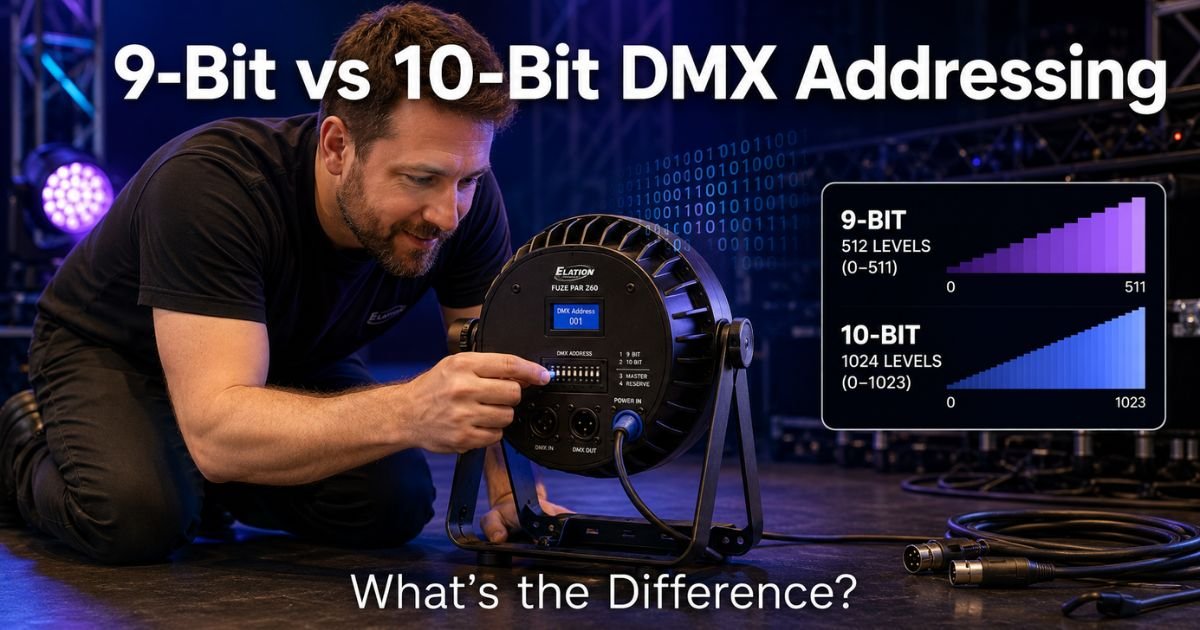
Check whether a tenth DIP switch is an address bit or a mode selector. Compare binary capacity with DMX channel limits and follow the fixture manual.
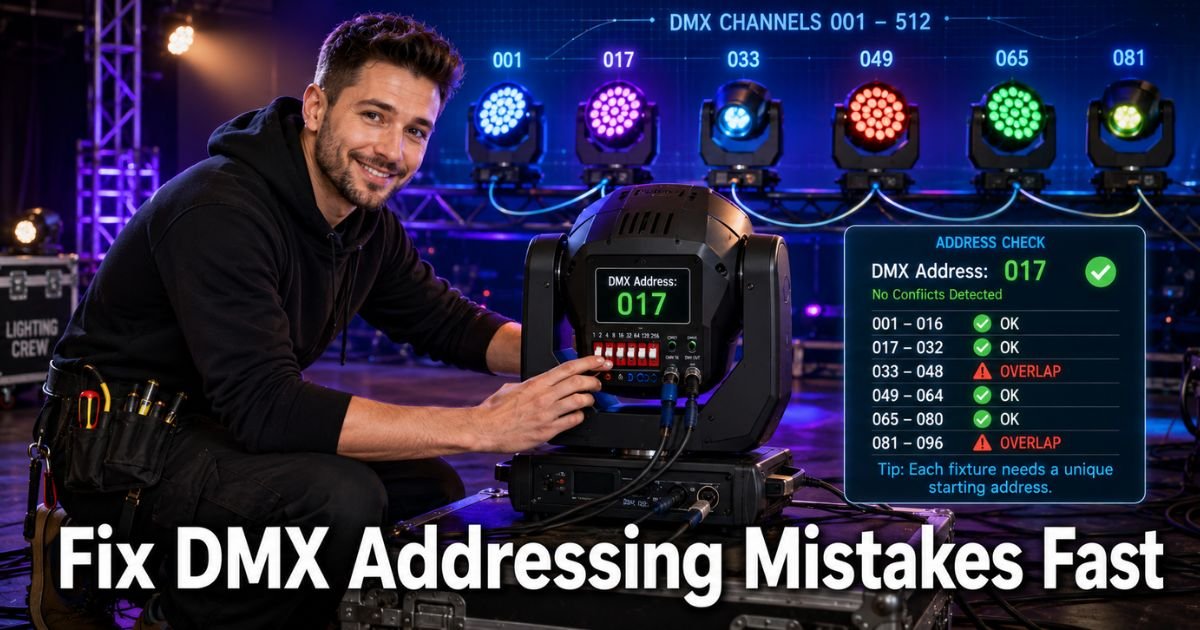
Avoid mismatched channel modes, unintended overlapping footprints, wrong bit order, and incorrect universe routing. Use a patch table to verify each fixture.
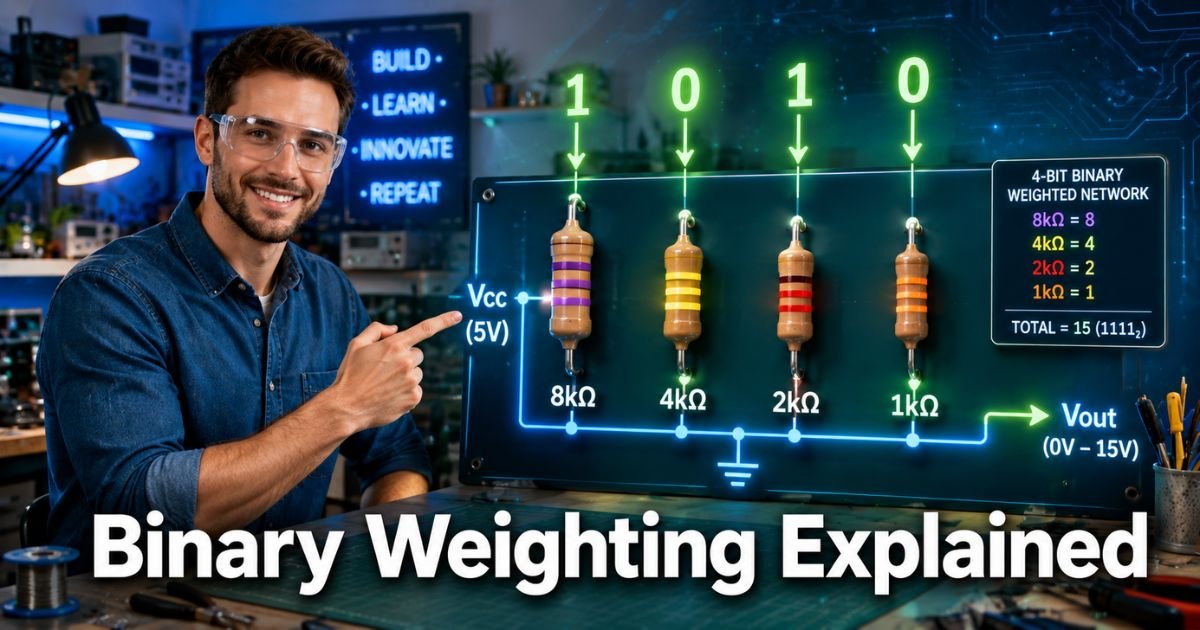
Understand binary weighting using powers of two. Add the weights of ON switches to calculate a value and distinguish address bits from mode controls.