
Ever popped open an old piece of gear or a moving head light and wondered why some switches feel like tiny piano keys while others slide like they’re on rails? Understanding the types of DIP switches can make troubleshooting or building your own setups so much easier. These little components are everywhere in electronics, from setting DMX addresses on stage lights to configuring circuit boards in everyday devices.
We’ll break down the three main types of DIP switches: rocker, slide, and piano. I’ll share practical examples so you can pick the right one every time. Whether you’re a hobbyist or a pro tech, this will help you work smarter and avoid those frustrating “why won’t this work” moments.
Exploring the Different Types of DIP Switches
DIP switches, or Dual In-line Package switches, have been around since the 1970s. They let you set binary configurations without needing software or extra hardware. Think of them as tiny manual toggles that tell your device things like “start at address 1” or “run in this mode.”
The beauty is in their simplicity. Flip one on or off, and you’ve changed how the whole system behaves. But not all DIP switches are created equal. The physical design changes how easy they are to use, how much space they take, and how durable they feel in real-world applications.
Now, let’s look at each type up close so you can spot them in the wild and choose wisely for your next project.
Rocker DIP Switches: The Seesaw Style That Feels Just Right
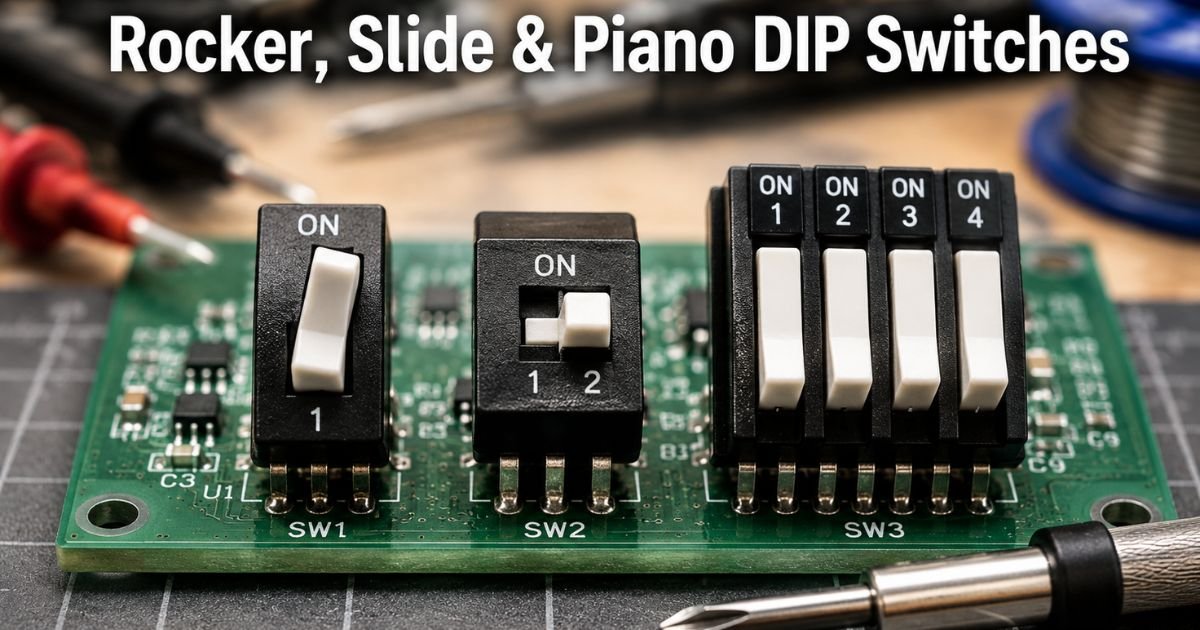
Rocker DIP switches get their name from the rocking motion you use to flip them. You press one end down, and the other pops up like a mini seesaw. This design gives excellent tactile feedback, so you know exactly when the switch has clicked into place.
They’re super common in consumer electronics where you might adjust settings occasionally. Picture the back of an old printer or a network router. The low profile keeps things compact, yet the rocker action makes them easy to spot and operate without tools.
Slide DIP Switches: The Compact Workhorses of Electronics
Slide DIP switches are probably the ones you’ve seen most often. These feature a small actuator that you push left or right (or sometimes forward and back) along a track. They’re the go-to for space-tight applications because they sit nice and low on the board.
The mechanism is straightforward and tough. No rocking or tall levers mean less chance of accidental bumps during shipping or installation. That’s why manufacturers love them for devices that get handled a lot, like gaming consoles or industrial controllers.
Piano DIP Switches: The Tall Keys That Make Changes a Breeze
Piano DIP switches stand out because of their vertical, raised actuators that look exactly like miniature piano keys. You press the top of the key down or up to toggle the position. This taller design makes them the easiest to use with just your finger, no tools required in most cases.
They’re fantastic when you expect to change settings frequently. The clear visual layout lets you glance and see every position at once. Plus, the bigger size reduces the chance of mis-flipping in a hurry.
Comparing Rocker, Slide, and Piano DIP Switches Side by Side
Choosing between the types of DIP switches comes down to your specific needs. Here’s a simple comparison to help you decide at a glance.
| Feature | Rocker DIP Switches | Slide DIP Switches | Piano DIP Switches |
|---|---|---|---|
| Actuation Style | Rocking seesaw motion | Horizontal or vertical slide | Tall vertical key press |
| Size Profile | Low and compact | Lowest and most space-saving | Taller and more prominent |
| Ease of Use | Good tactile click | Requires tool in tight spots | Finger-friendly, no tools |
| Durability | Solid for occasional use | Extremely rugged | Great for frequent changes |
| Best For | Consumer gear, audio interfaces | Lighting fixtures, PCBs | Prototyping, stage equipment |
| Visual Clarity | Moderate | Can be recessed and hard to see | Excellent, keys stand out |
This table shows why pros mix and match depending on the job. Slide types rule in tight, permanent installs. Piano keys shine when speed matters. Rocker switches strike a nice balance for everyday electronics.
Real-World Applications and How to Choose the Right One
You’ll find these switches in all sorts of places. Slide DIP switches often handle DMX addressing on moving head lights because they stay secure during transport. Rocker versions pop up in home theater receivers for quick mode changes. Piano DIP switches make life easier in development labs where engineers flip settings dozens of times a day.
When picking one, ask yourself a few questions. How often will I change the settings? Is space super limited? Do I need something I can operate quickly in low light? Answering those points you straight to the best type.
For bigger rigs, I always recommend testing a sample first. Grab a cheap breakout board and play with each style. It only takes a few minutes, but it prevents headaches later.
Tips for Working with Any Type of DIP Switch
No matter which type you pick, a few habits keep things running smoothly. Always power down the device before flipping switches to avoid shorts or glitches. Use a proper tool if the switches are recessed. And label your settings with a small sticker. Trust me, you’ll thank yourself during late-night load-ins.
Clean the switches occasionally with compressed air. Dust buildup can cause intermittent contacts over time. If a switch feels loose, it’s probably time to replace the whole DIP package rather than forcing it.
For deeper dives into switch specs, check out the detailed guides from manufacturers like NKK Switches. Their resources break down everything from current ratings to lifespan data.
Common Mistakes to Avoid When Using DIP Switches
One big pitfall is forgetting to power cycle after changes. The device won’t register the new settings until it reboots. Another is overlapping addresses in a daisy-chain setup, which causes total chaos. Always plan your binary math ahead.
I’ve seen folks misread the ON direction too. Some switches mark it clearly, but others don’t. Double-check the manual every time. And never force a stuck switch. A gentle touch prevents broken plastic or bent pins.
How These Switches Fit Into Modern Tech Trends
Even with wireless options and app-based controls growing fast, DIP switches still hold their ground. They’re cheap, reliable, and don’t need batteries or Wi-Fi. In pro lighting and industrial automation, they remain the gold standard for fail-safe configuration.
Looking ahead, hybrid designs are popping up that combine the best traits. But for now, mastering rocker, slide, and piano types gives you a solid foundation.
FAQs About Types of DIP Switches: Rocker, Slide, and Piano
What is the main difference between rocker, slide, and piano DIP switches?
The biggest difference comes down to how you actuate them. Rocker switches rock back and forth, slide switches push along a track, and piano switches use tall keys you press like piano notes. Each offers unique advantages in size, ease of use, and visibility.
Which type of DIP switch is best for DMX addressing on moving head lights?
Slide DIP switches are the most popular choice for DMX setups because they’re compact and stay secure. However, if you change addresses often, piano DIP switches make the job faster and tool-free. It really depends on your rig’s needs and how accessible the panel is.
Can I replace one type of DIP switch with another on my circuit board?
Usually yes, but you need to match the pin count, spacing, and electrical ratings exactly. Rocker, slide, and piano versions often share the same footprint, but always check the datasheet. A quick swap can upgrade usability without redesigning the whole board.
Conclusion
There you have it. The types of DIP switches might seem like small details, but they make a huge impact on how smoothly your electronics perform. Next time you open up a fixture or prototype, you’ll know exactly what you’re looking at and why it matters.
Take these insights, experiment a little, and watch how much more confident you feel tackling your next project. Happy switching.
Disclaimer: This article is for informational and educational purposes only. Electronics work can involve risks, and components vary by manufacturer. Always consult your specific device’s manual, follow safety guidelines, and consider professional help if you’re unsure about any modifications.